Phase 1 — When the Storm Hit

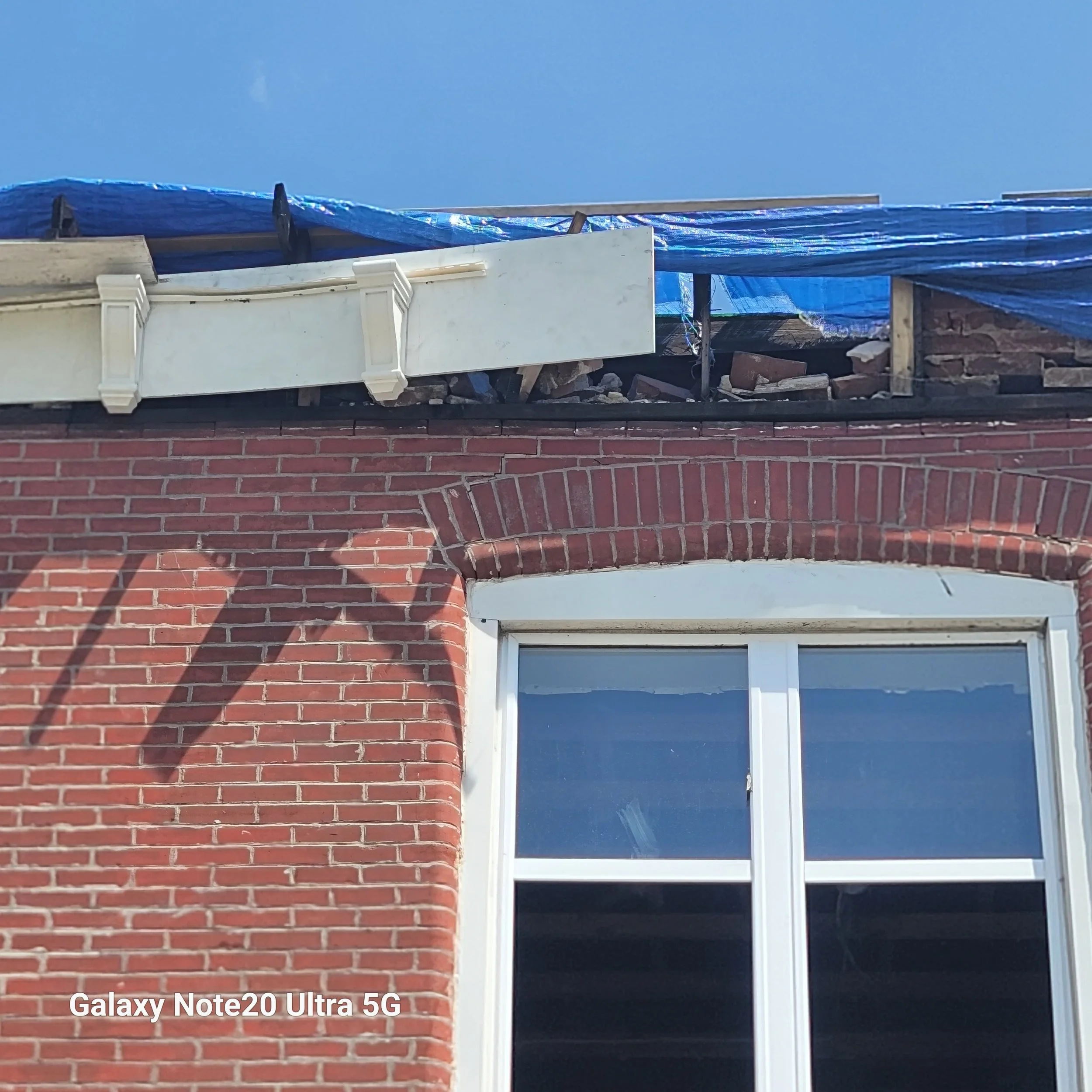
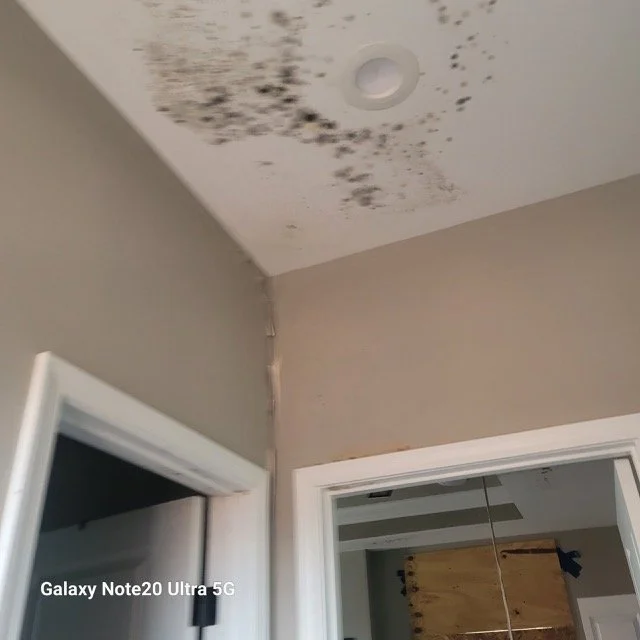
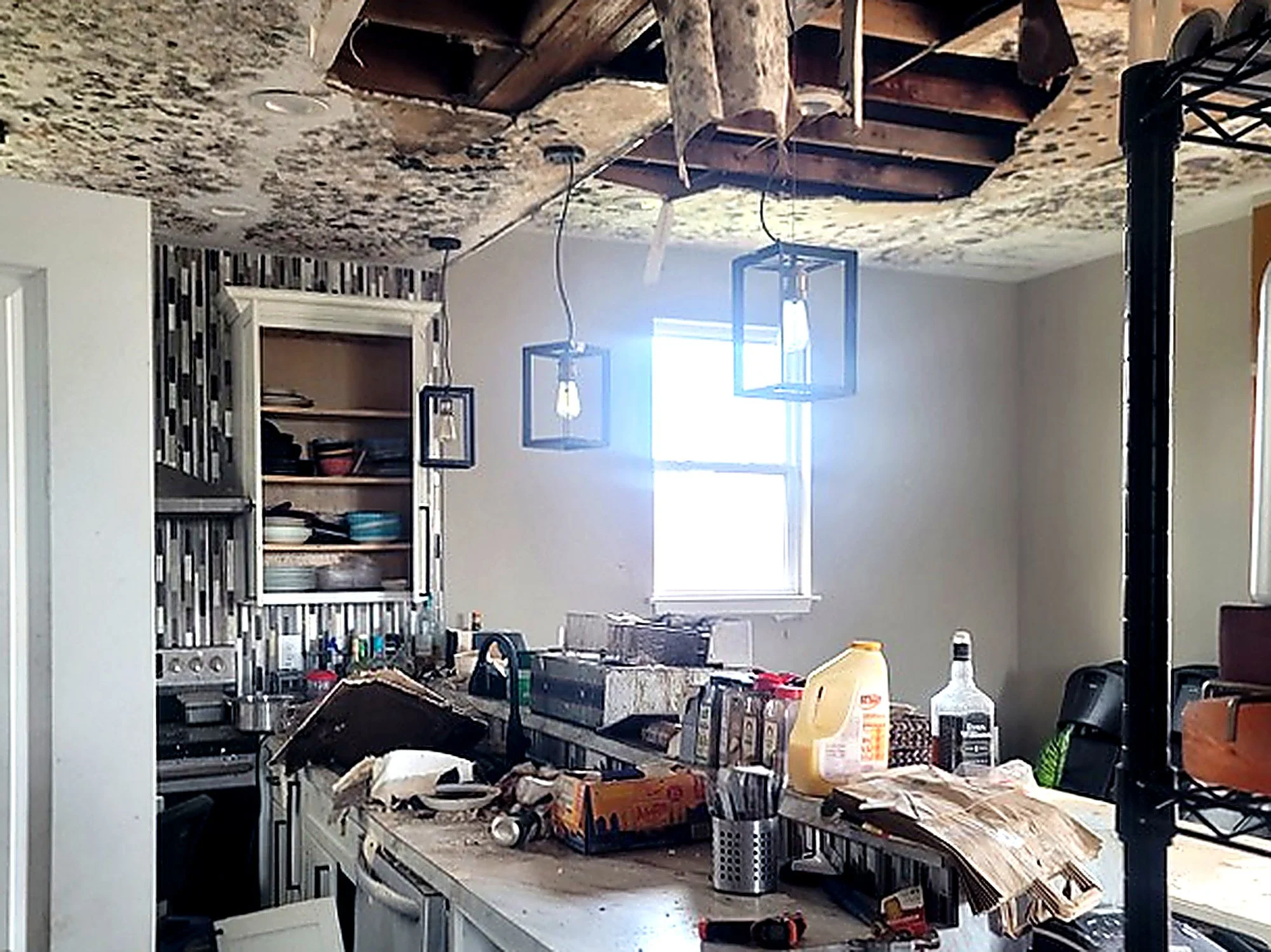
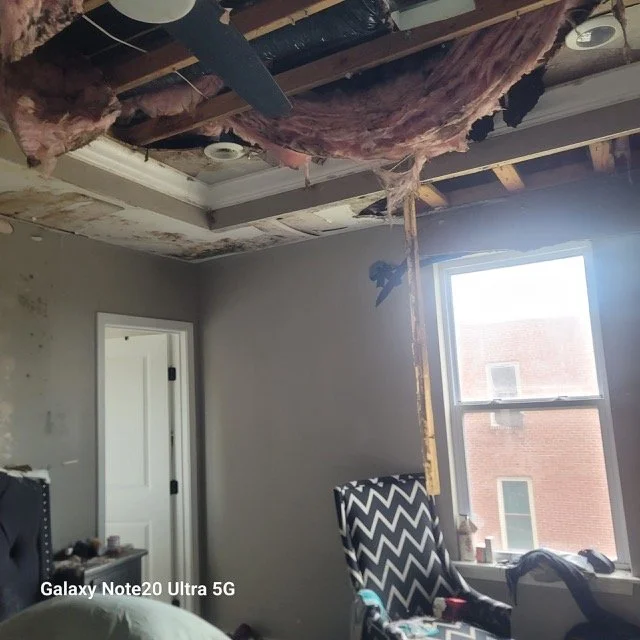
After the storm, the home was left exposed due to severe roof damage. Water entered the structure, affecting ceilings and interior spaces and making the home unsafe to occupy as-is. Phase One focused on documenting the damage, protecting what could be saved, and stabilizing the property so the rebuilding process could begin safely and correctly.
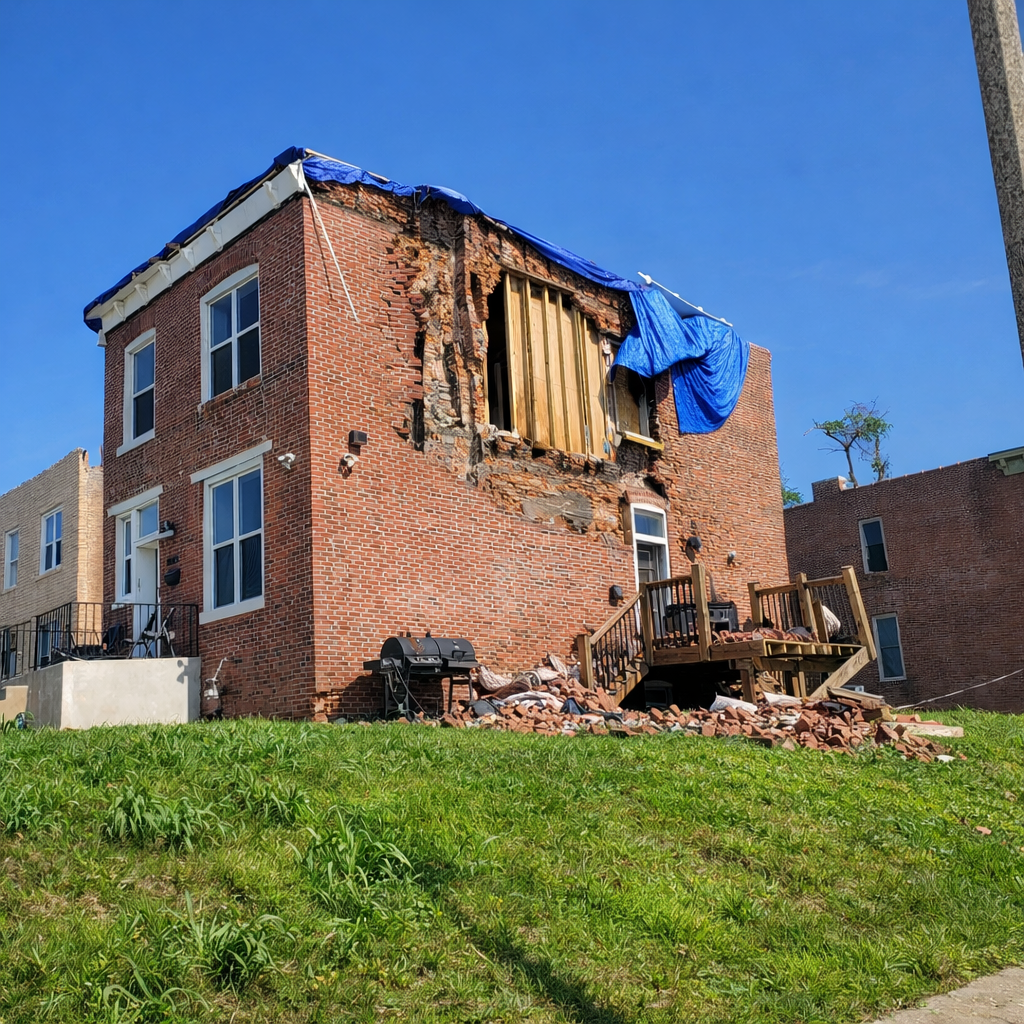
A two-story brick building with a large hole in the upper wall and a blue tarp hanging over it. Debris and bricks are scattered around the damaged area with an outdoor deck at the back and a small grassy yard.
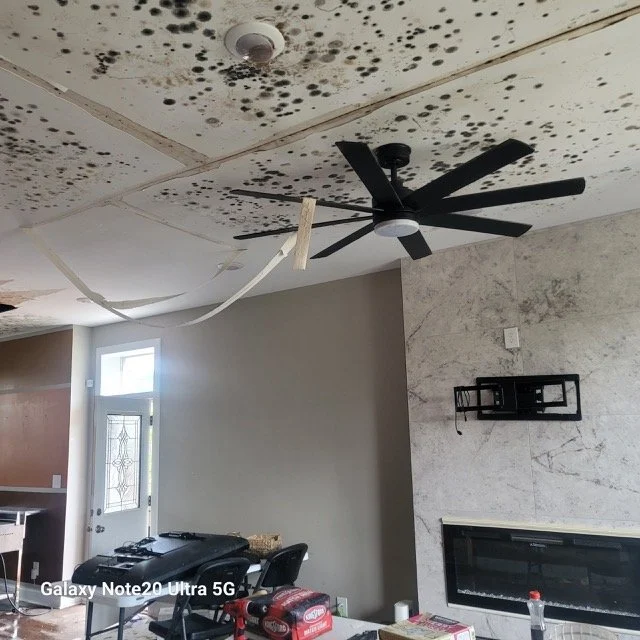
Ceiling damaged with black mold and a broken ceiling fan in a living room, scattered items including a desk, chair, fire extinguisher, and television.
Brick building with a large window, and damaged roof with construction debris and blue tarp.
Ceiling with visible water damage and mold growth in a room with a smoke detector and a doorway.
Kitchen under renovation with exposed ceiling, hanging light fixtures, cluttered countertop, open cabinets, and construction debris.
Room under renovation with exposed ceiling insulation, missing drywall, a window, and a patterned chair.

Phase 2 — Rebuilding the Home

Once the home was stabilized, reconstruction began. This phase focused on rebuilding the structure, replacing the damaged roof, and restoring the systems needed to make the home safe and livable again. Each step was completed methodically, with attention to proper sequencing and long-term durability, as the home moved closer to full restoration.
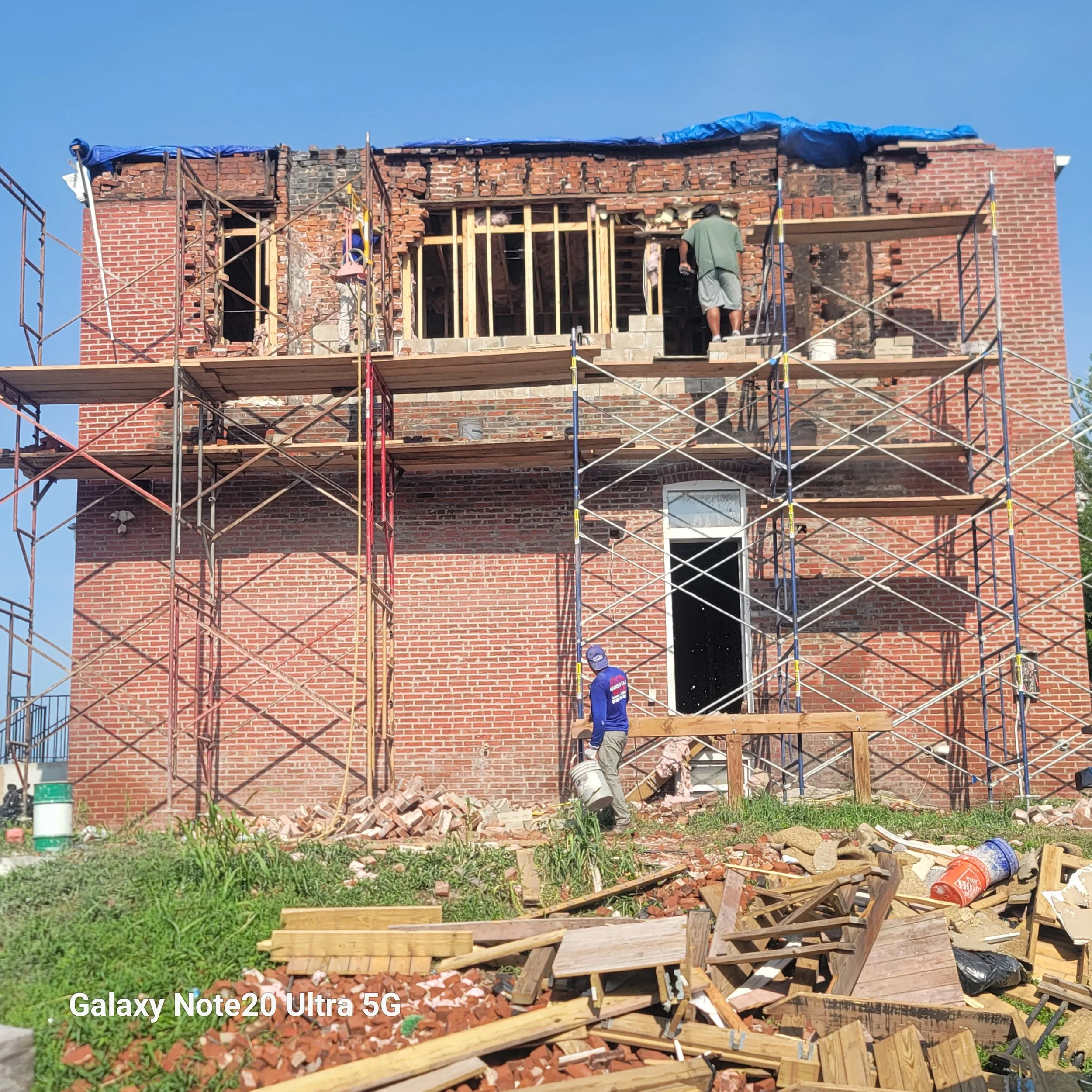
Construction workers rebuild a brick house with scaffolding and wood framing, debris scattered on the ground, under clear blue sky.
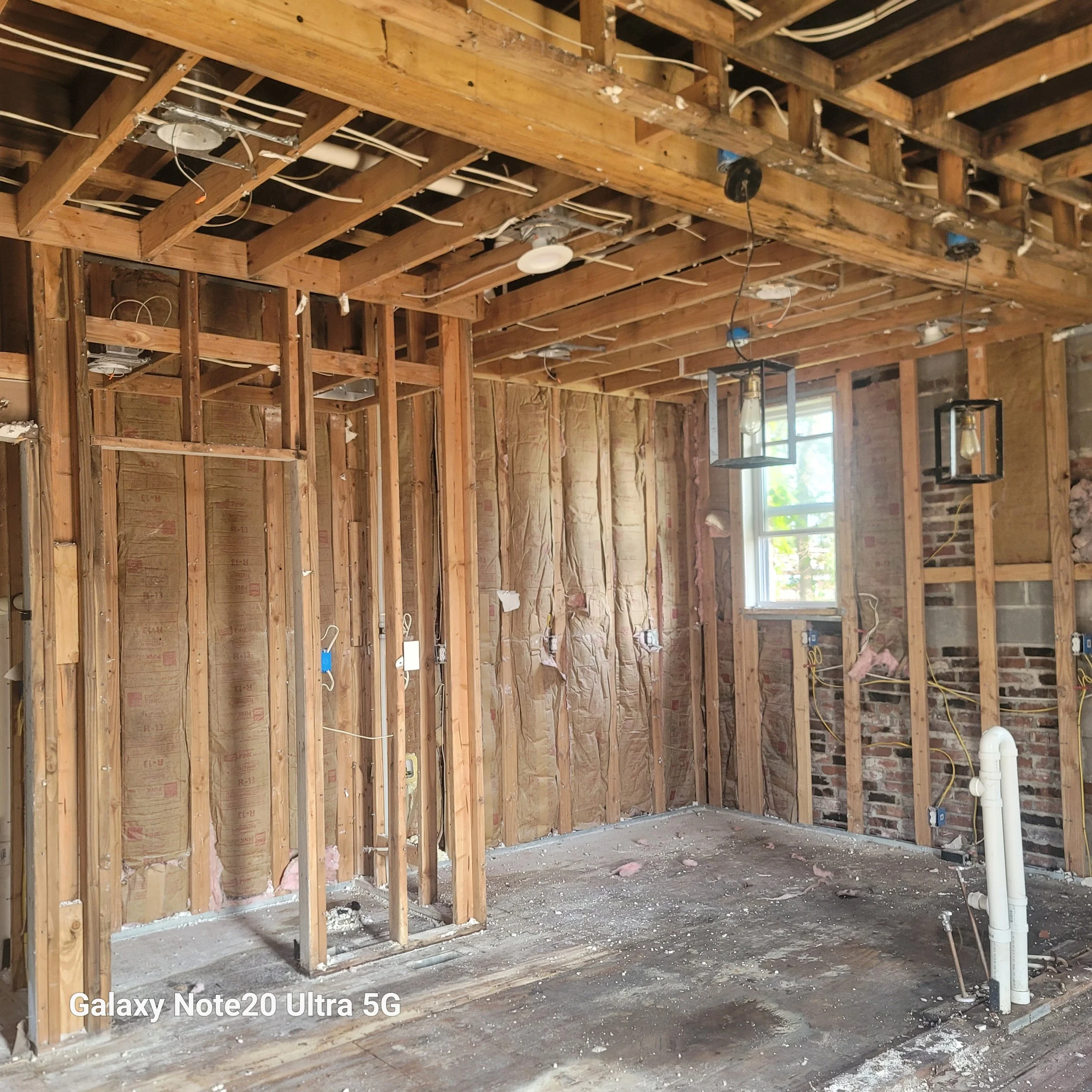
Interior of a house under renovation with exposed wooden studs, insulation, and electrical wiring. There is a window on the wall, and hanging light fixtures without bulbs.
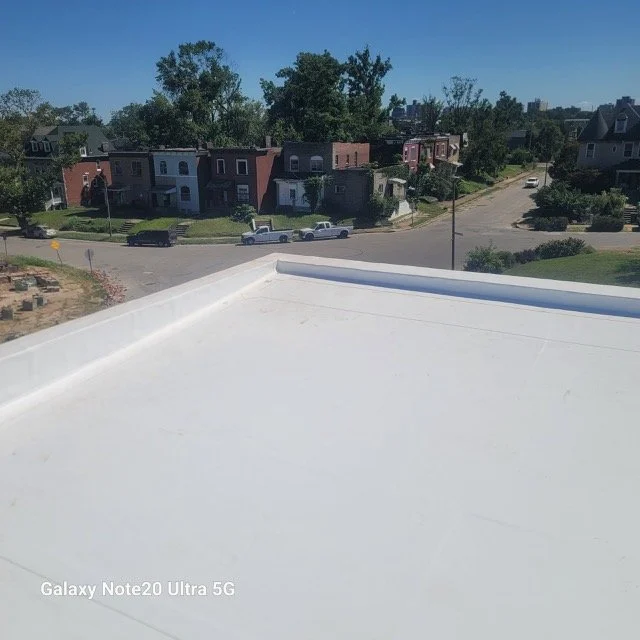
View of residential houses and trees from a rooftop with a clear blue sky.
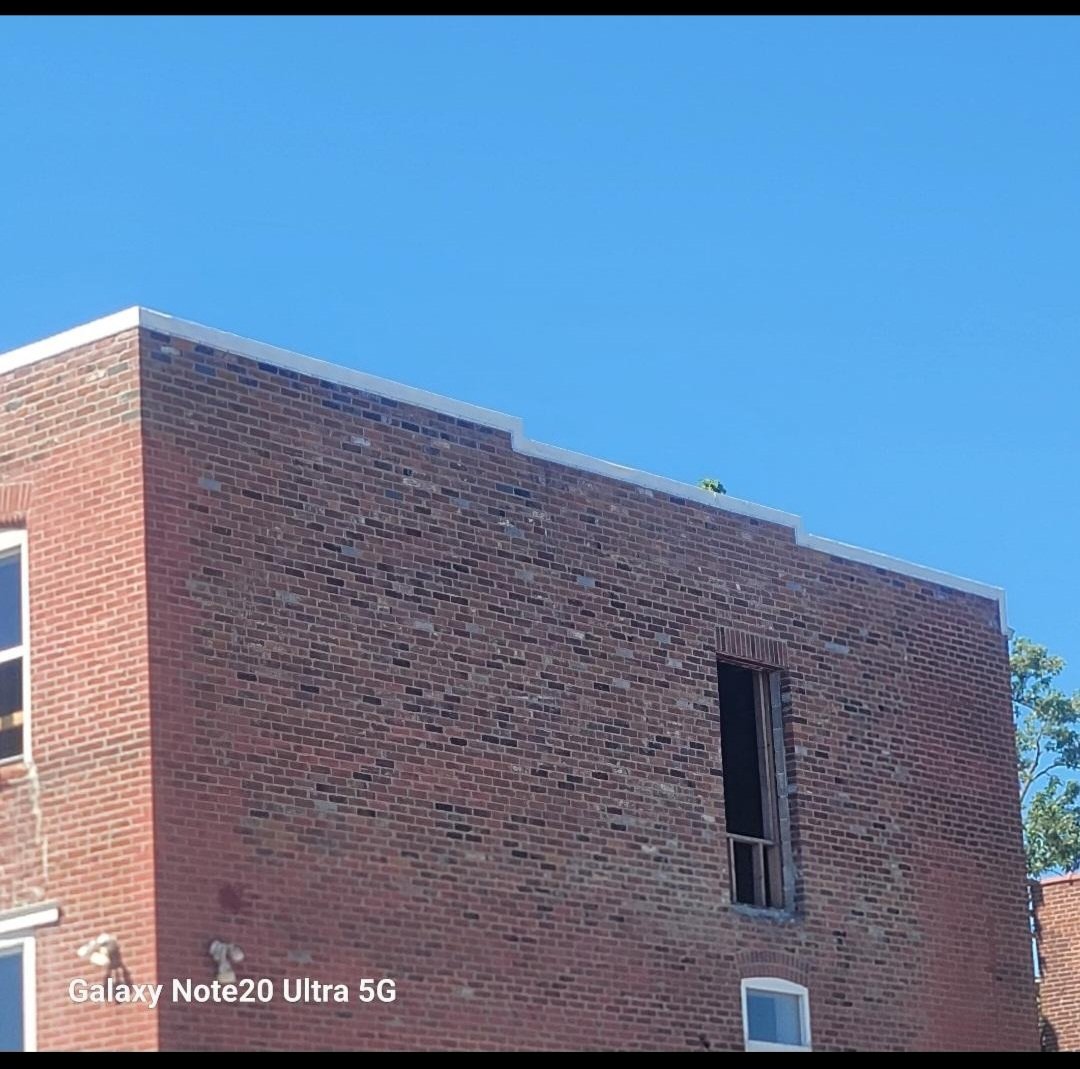
A brick building with a tall, narrow window and a bright blue sky in the background.
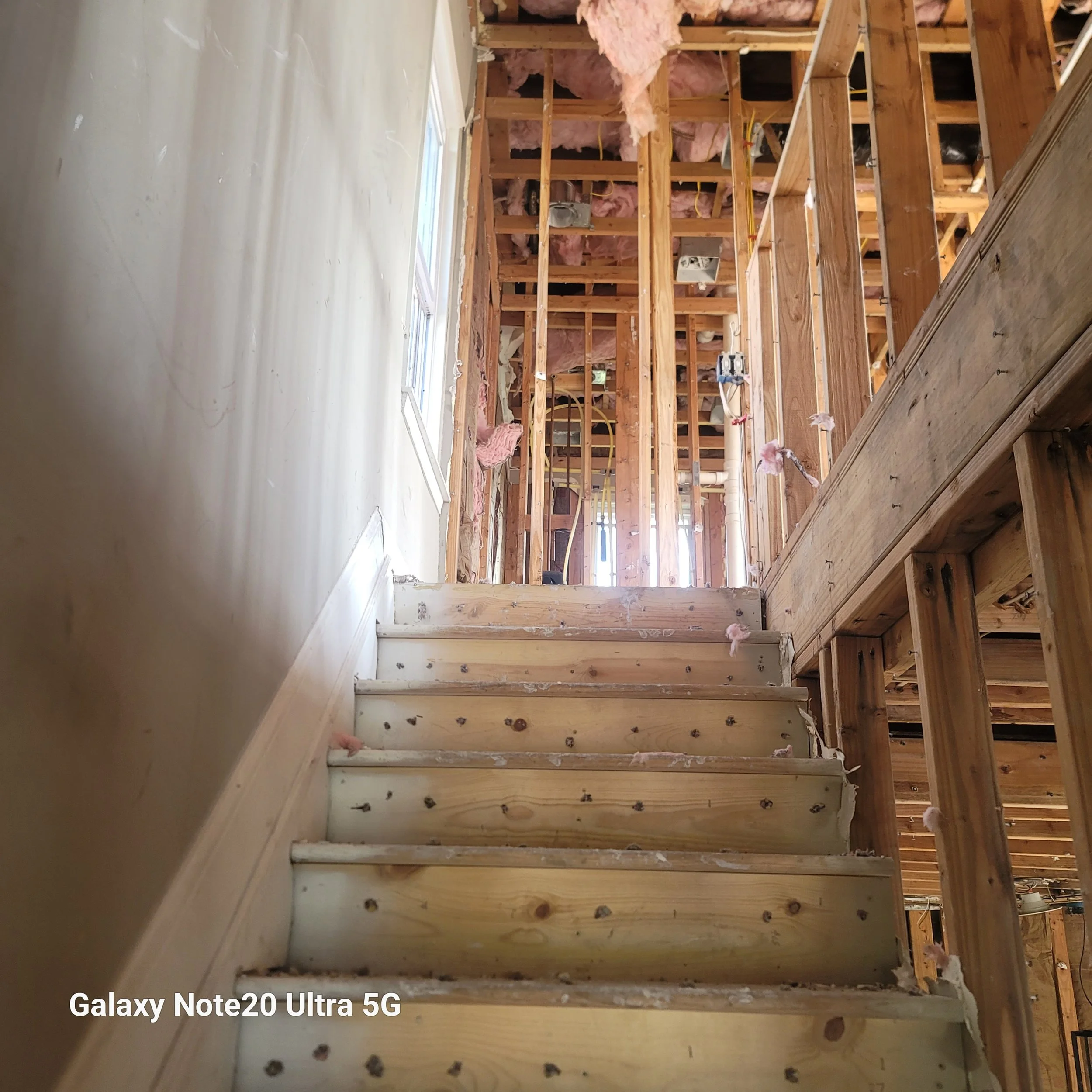
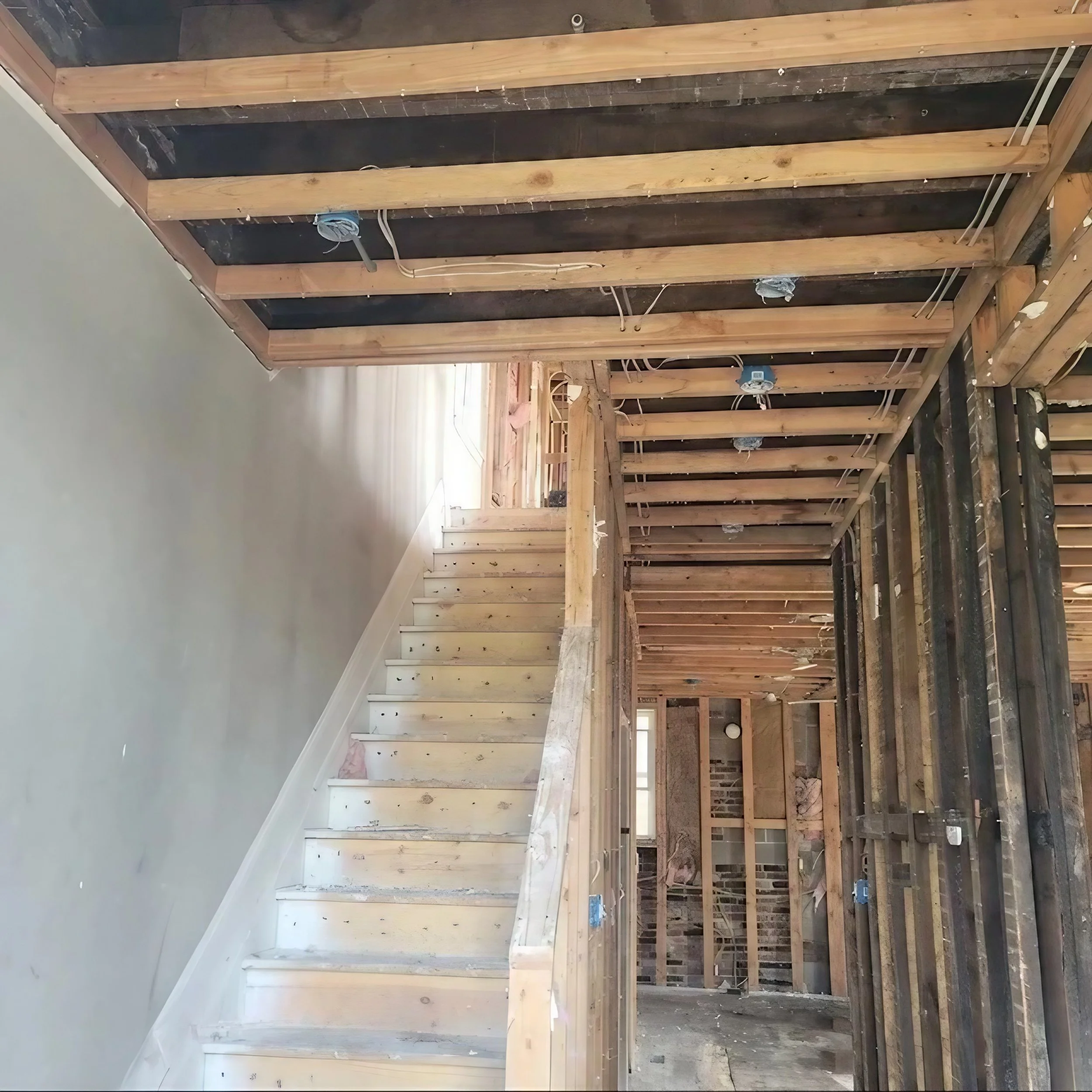
Interior view of a house under construction showing wooden framing, insulation, wiring, and a stairway leading to the upper floor.
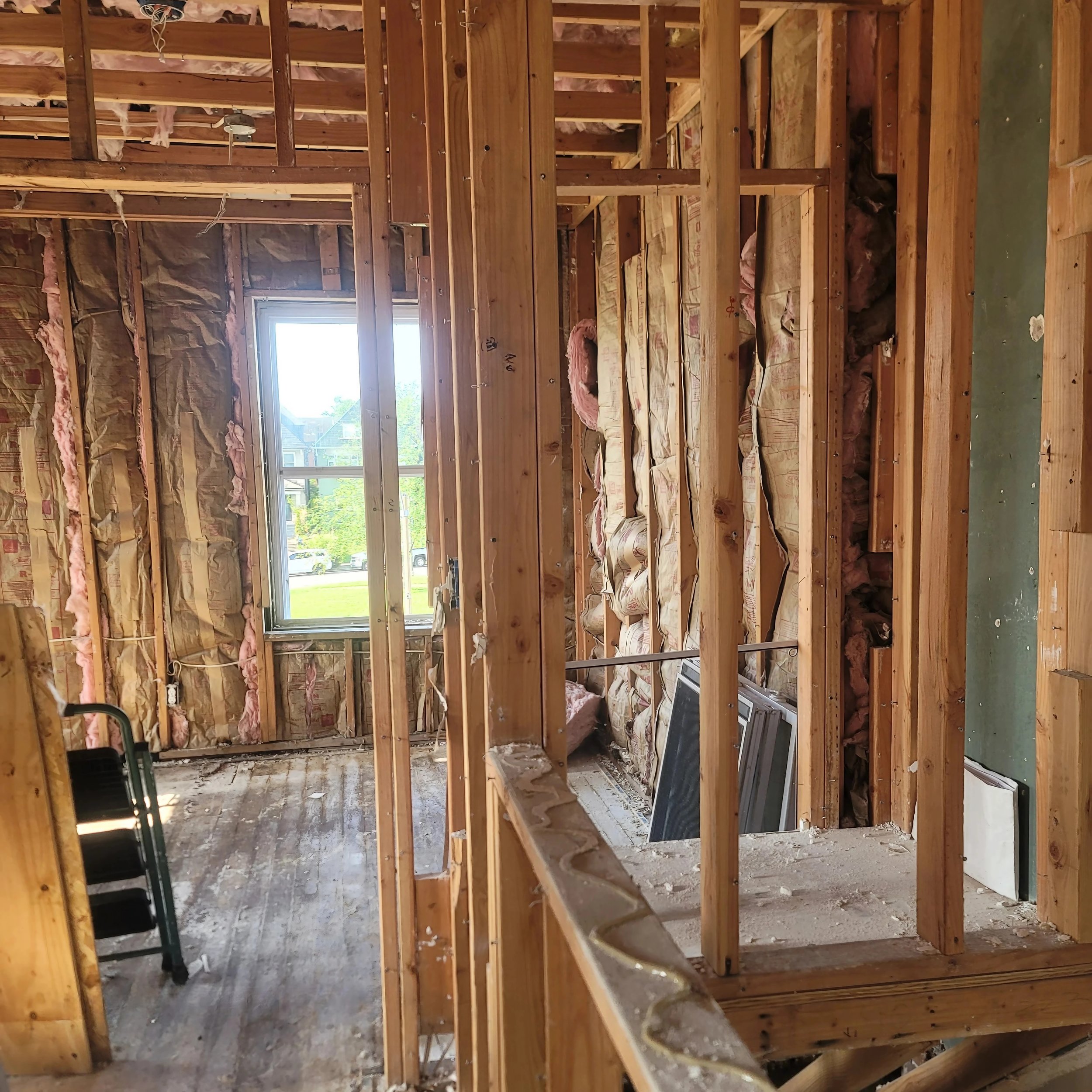
Interior view of a house under renovation, showing exposed wooden framing, insulation, and a window with a view of a grassy yard and houses outside.
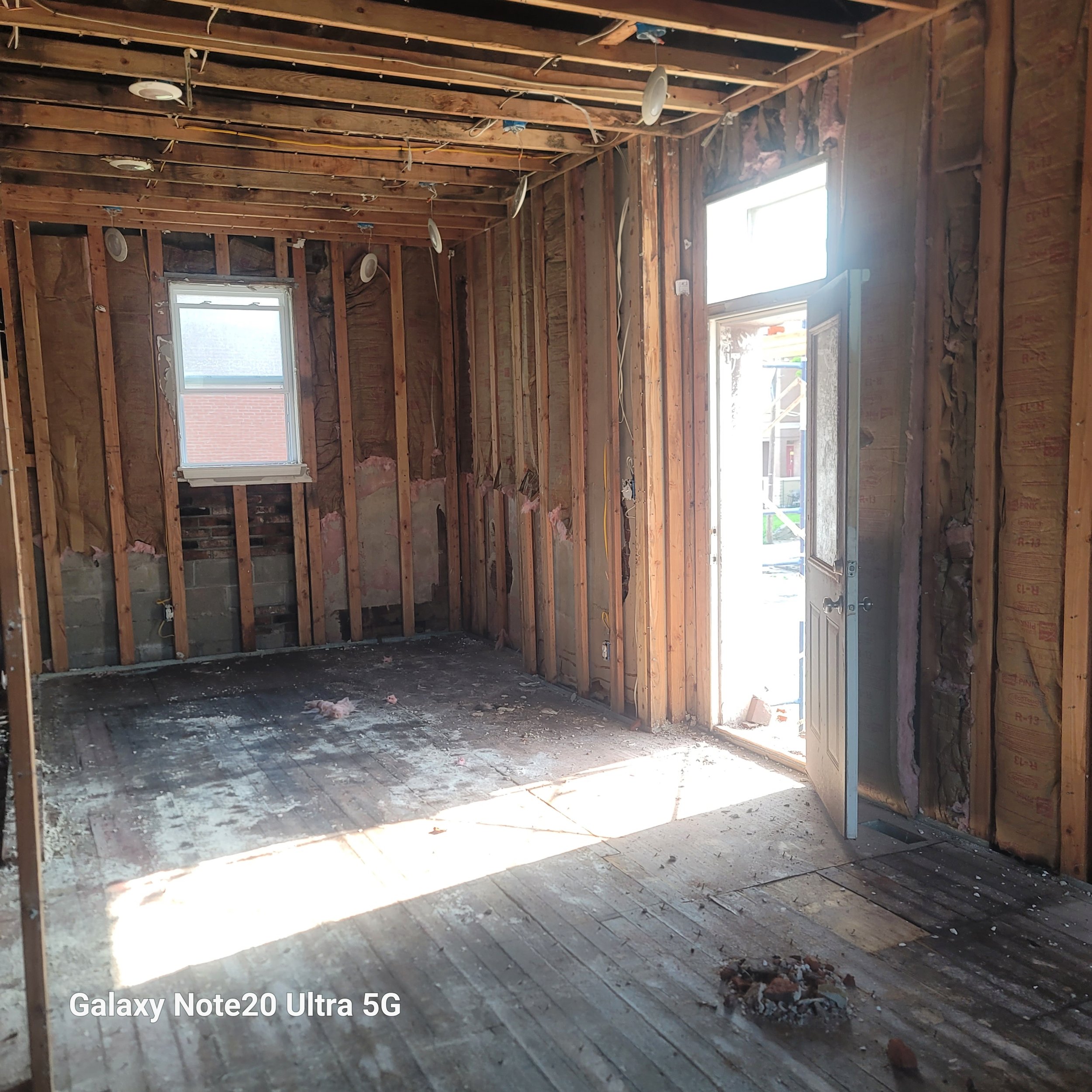
Interior of a room under construction with exposed wooden studs and framing, a small window, and an open door leading outside, with sunlight illuminating the unfinished floor.
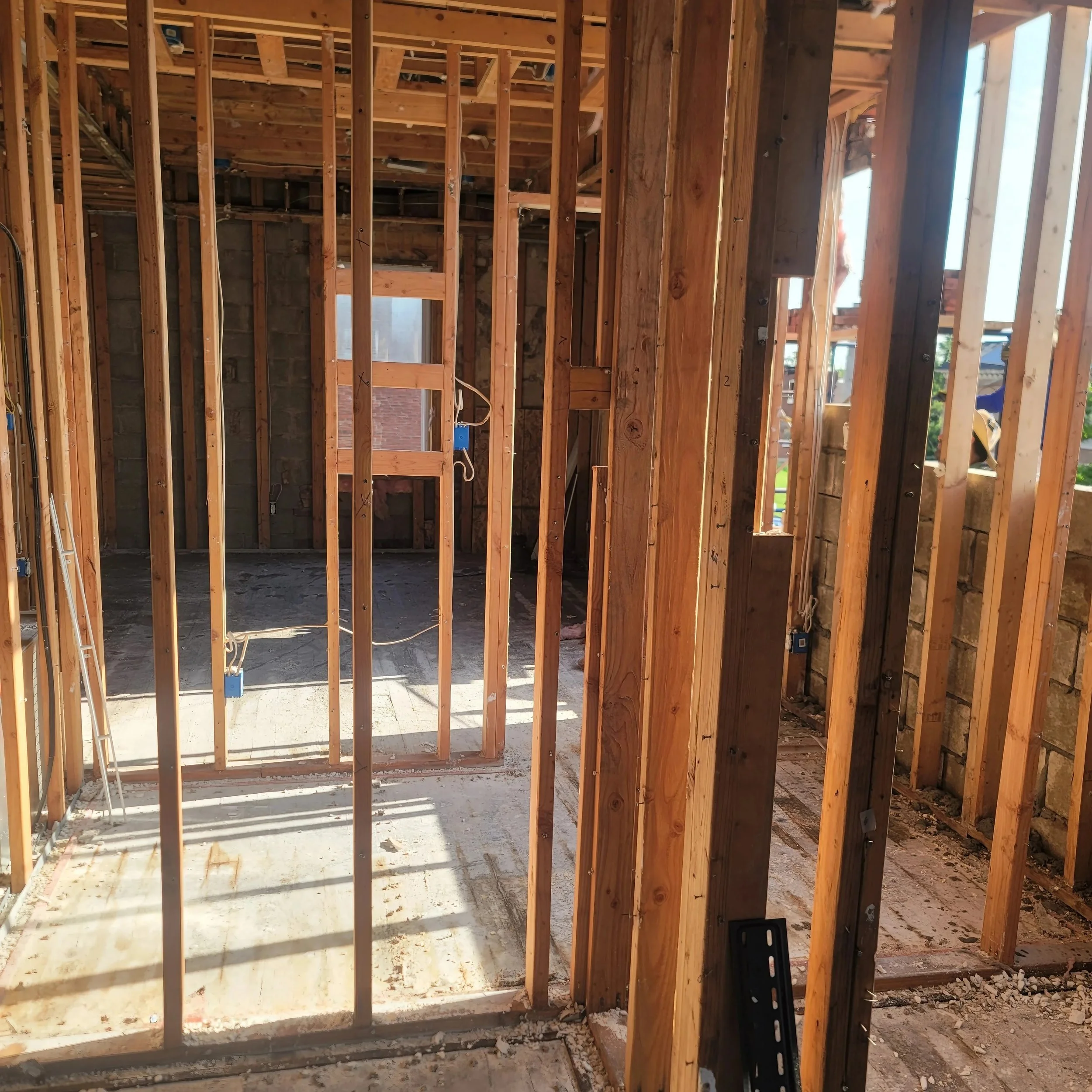
Interior view of a house under construction with exposed wooden framing, including upright studs, partial wall framing, and visible wiring, with sunlight coming through planned windows.
Construction site with wooden framing and stairs, unfinished interior walls.

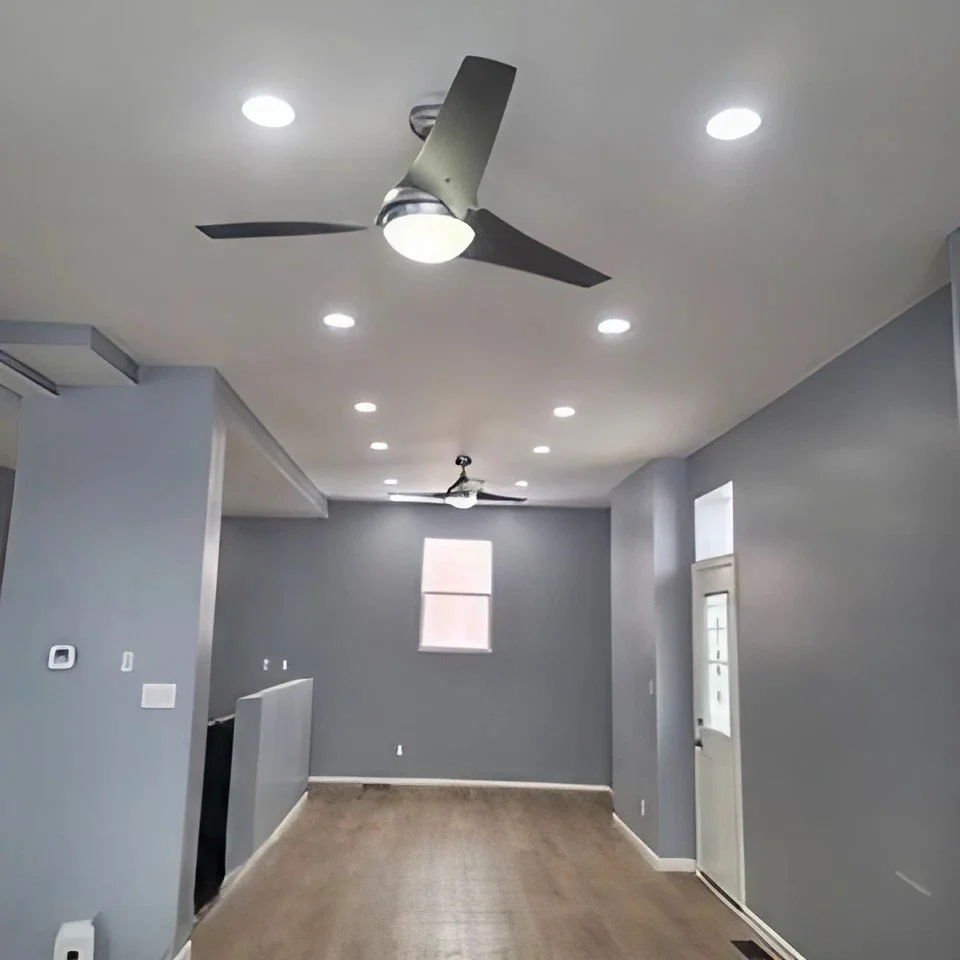
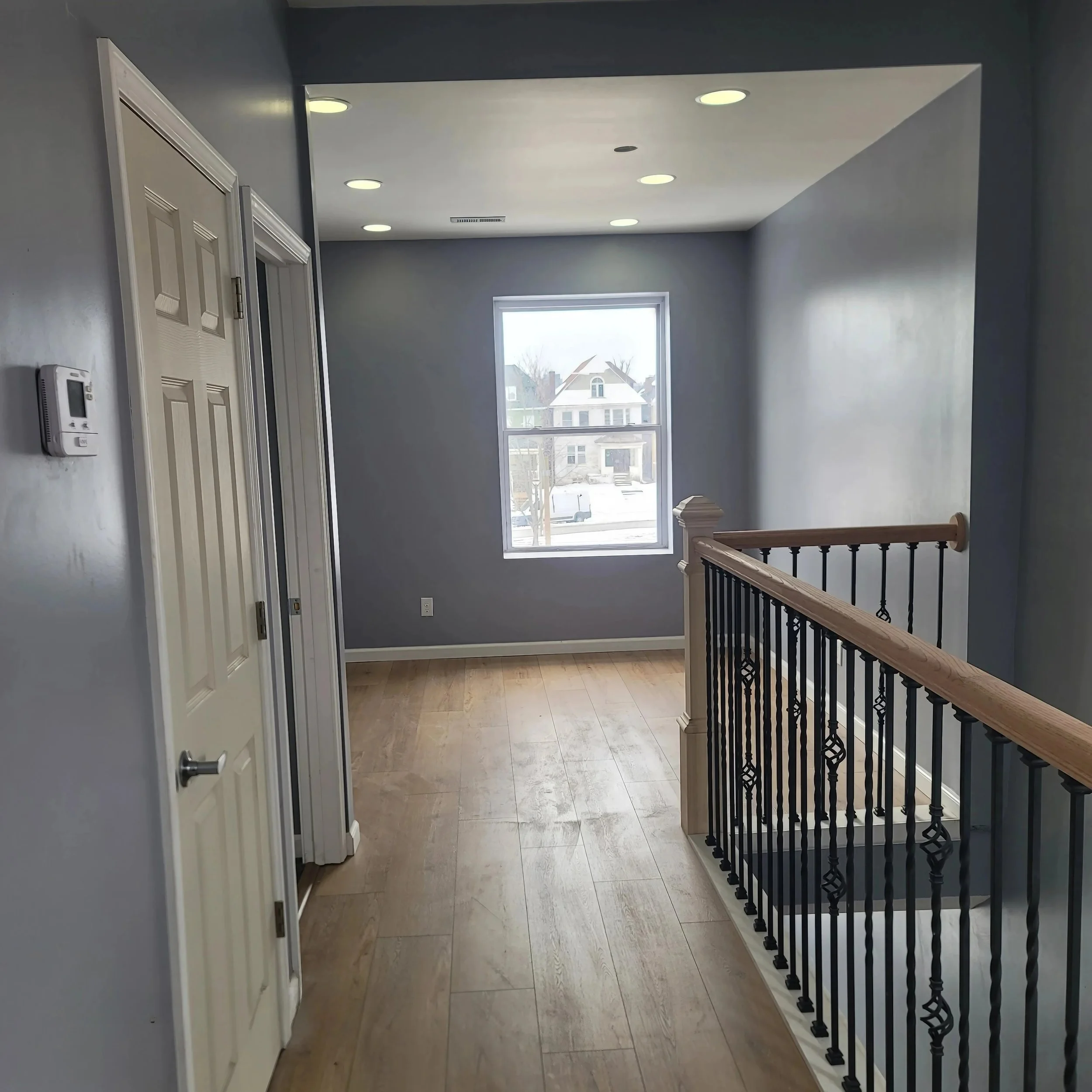
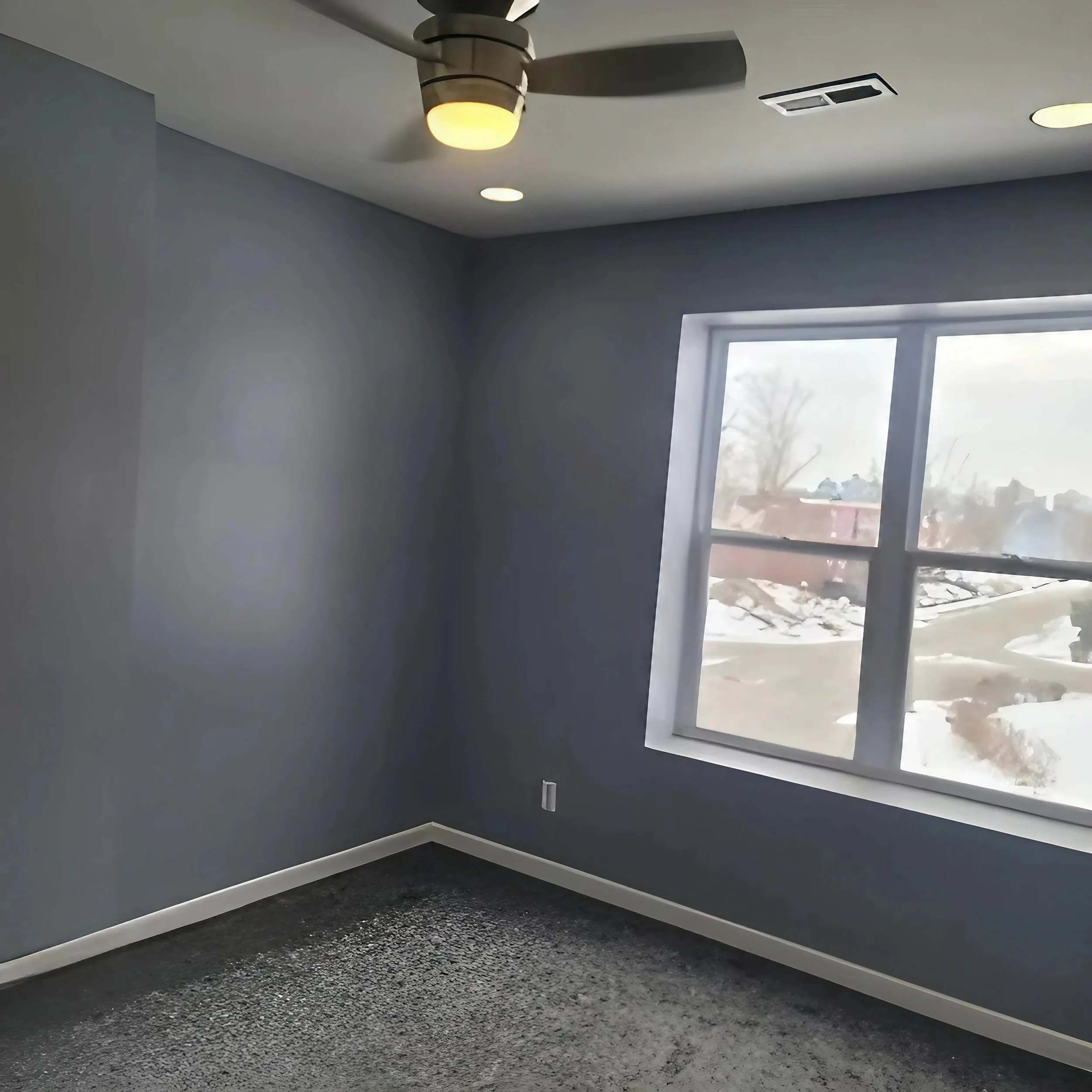
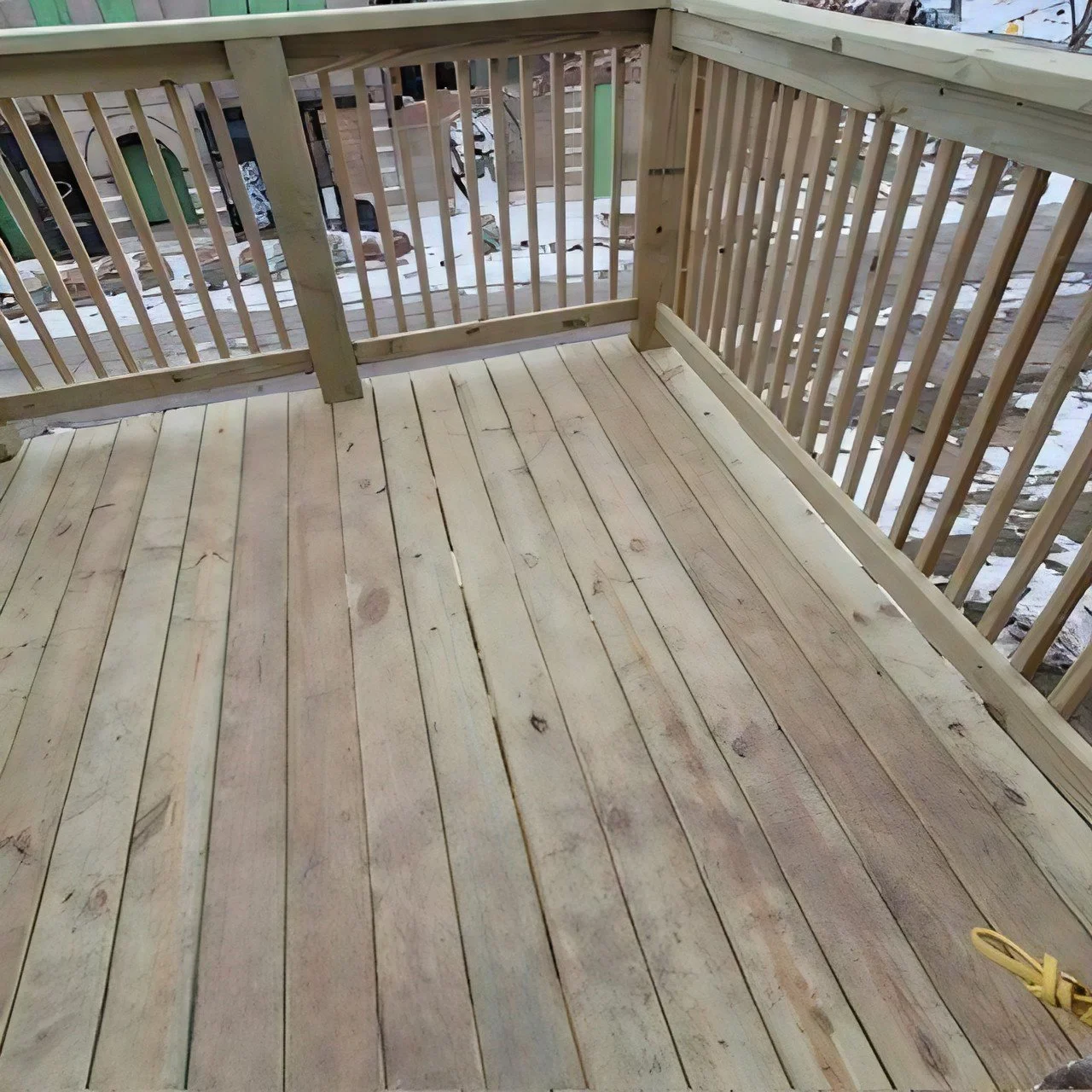
Phase 3 — Final Restoration & Close-Out (In Progress)

The final phase focuses on completing remaining interior finishes, conducting required inspections, and confirming that all building systems are functioning as intended. This stage ensures the home is fully restored, code-compliant, and ready for long-term occupancy. Completion is anticipated for late February 2026, pending final inspections and approvals.
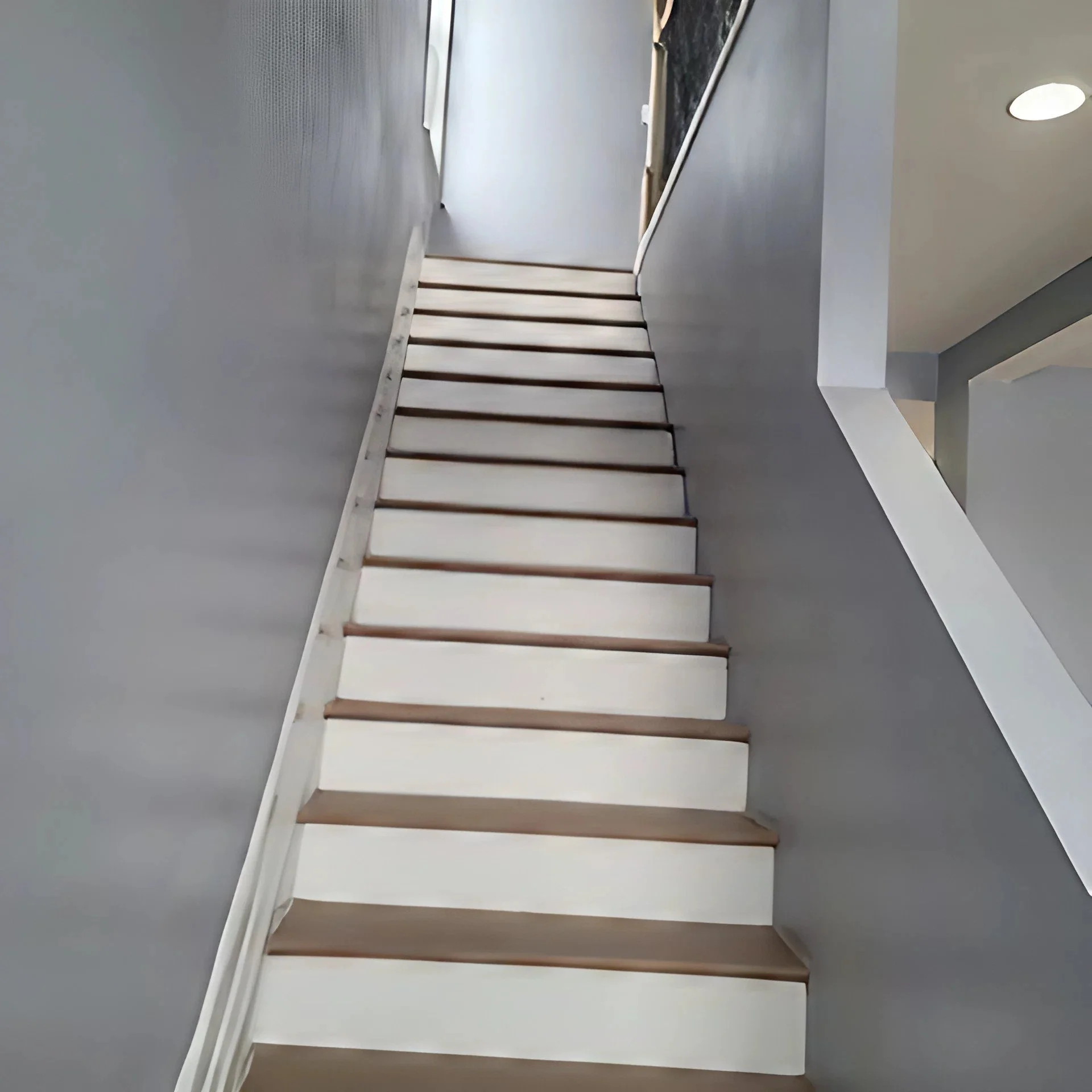
Interior view of a staircase with white risers and wooden treads, leading up to a hallway with gray walls and ceiling, with furniture and a window visible at the top.
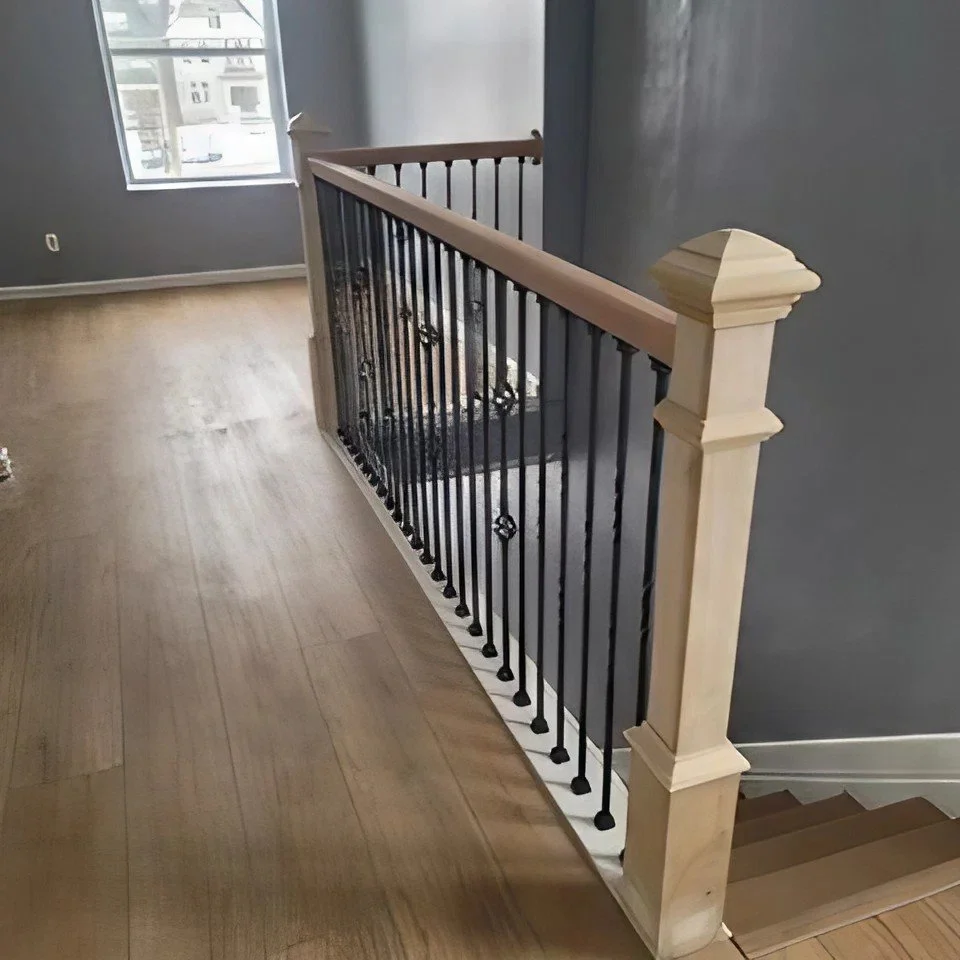
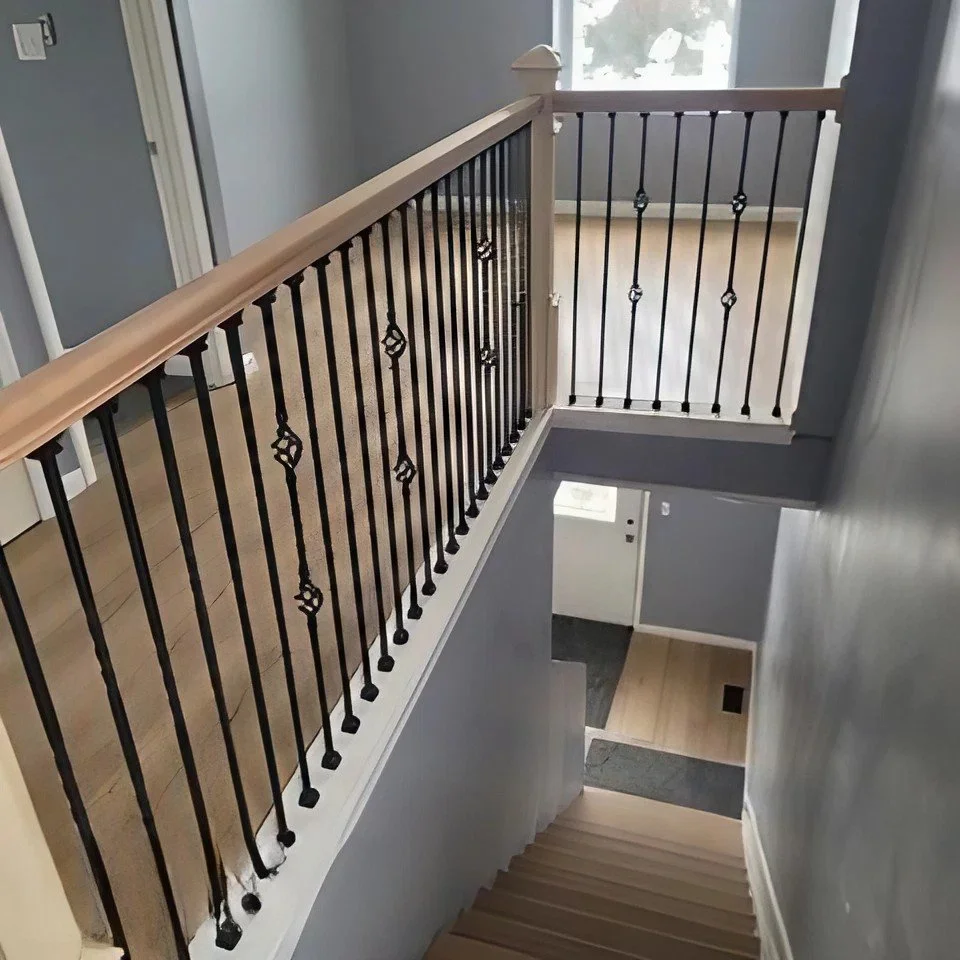
Interior view of a staircase with black wrought iron railing and light wood handrail, looking down from upstairs to the ground floor, with a window and door in the background.
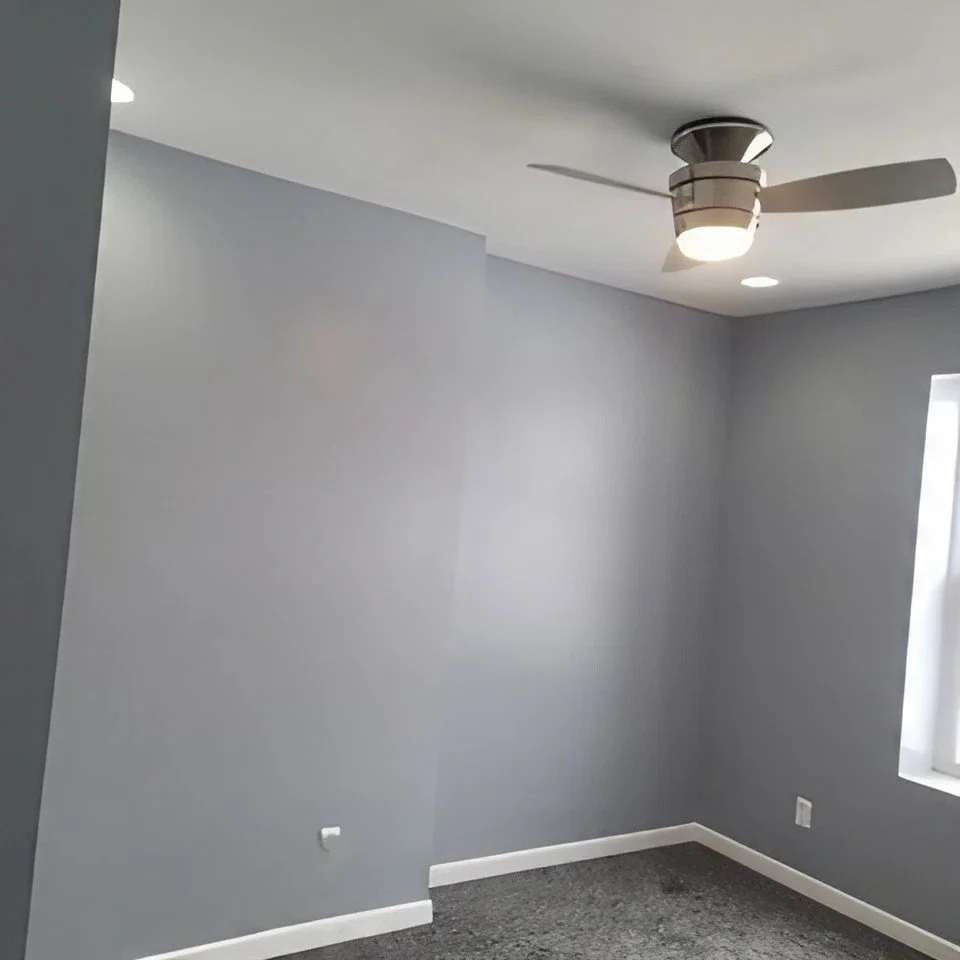
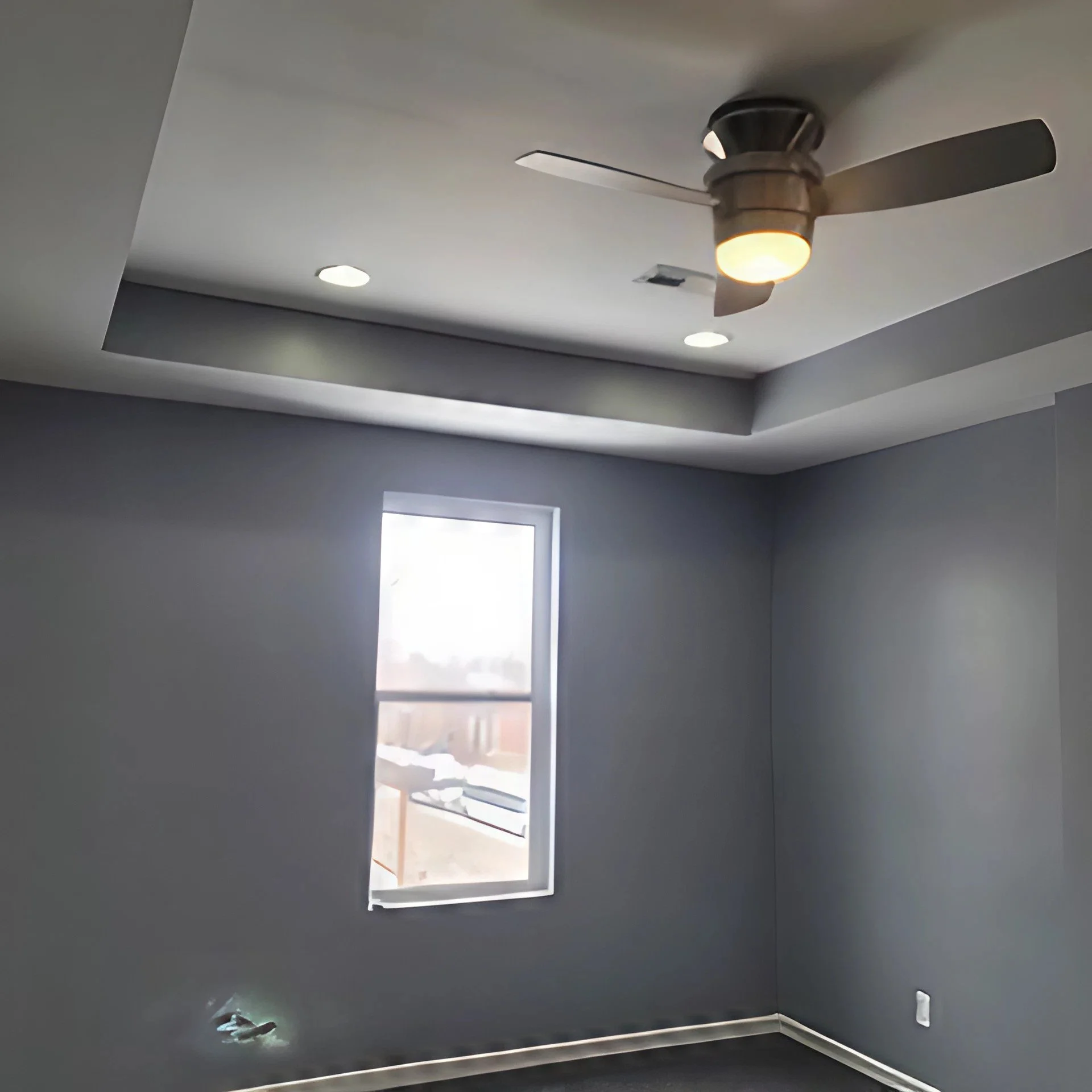
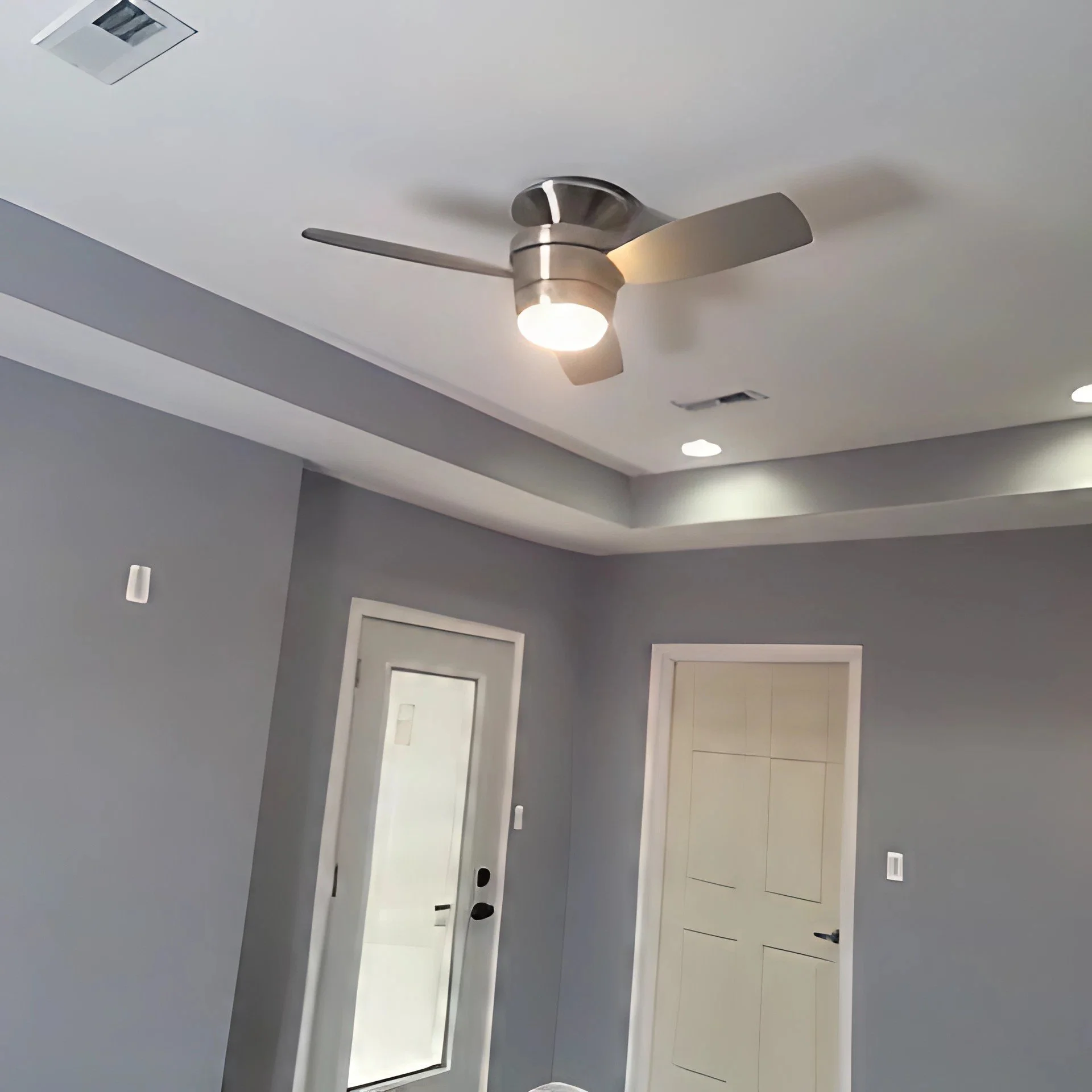
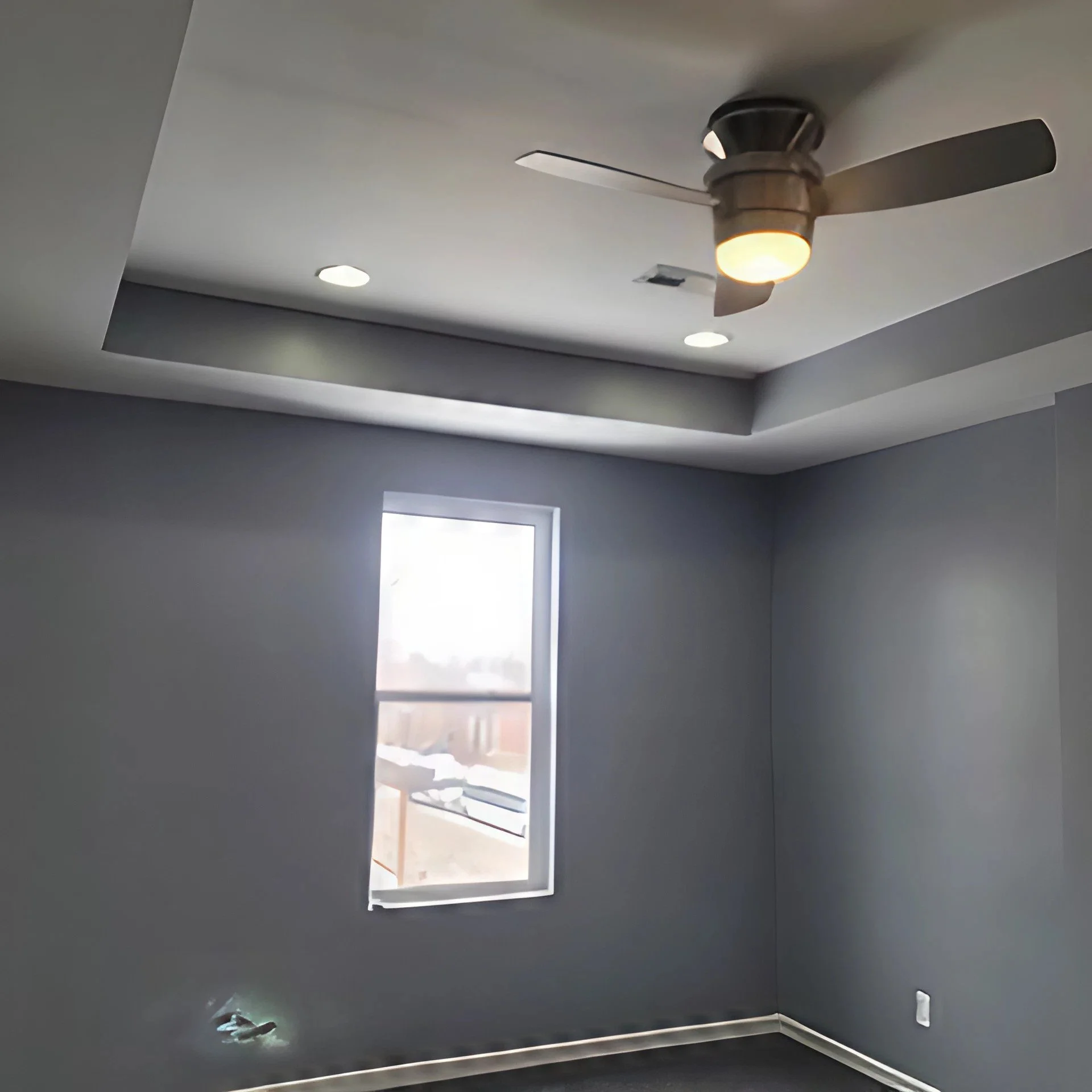
Empty room with gray walls, white baseboards, dark gray carpet, window with white trim, and ceiling fan with light.
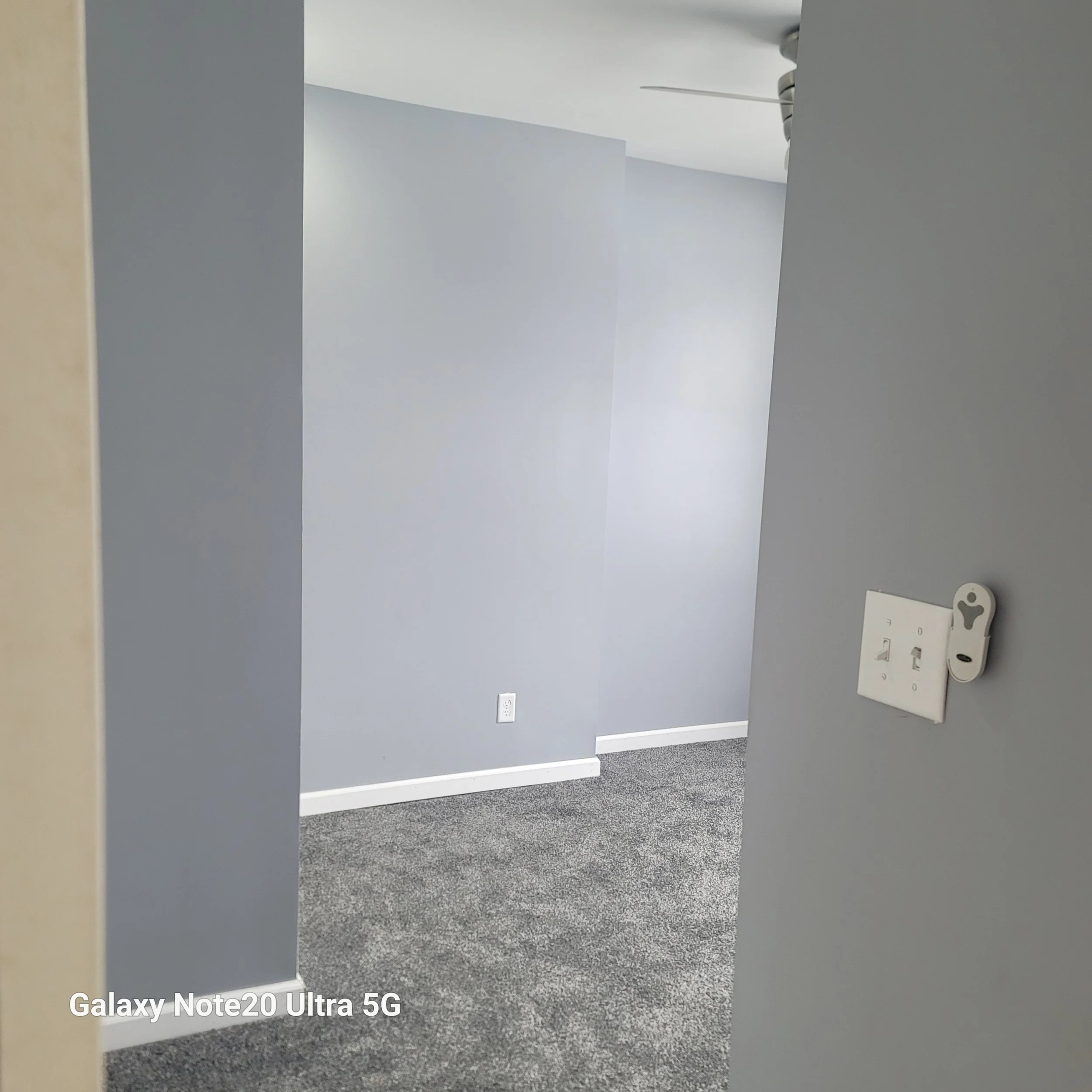
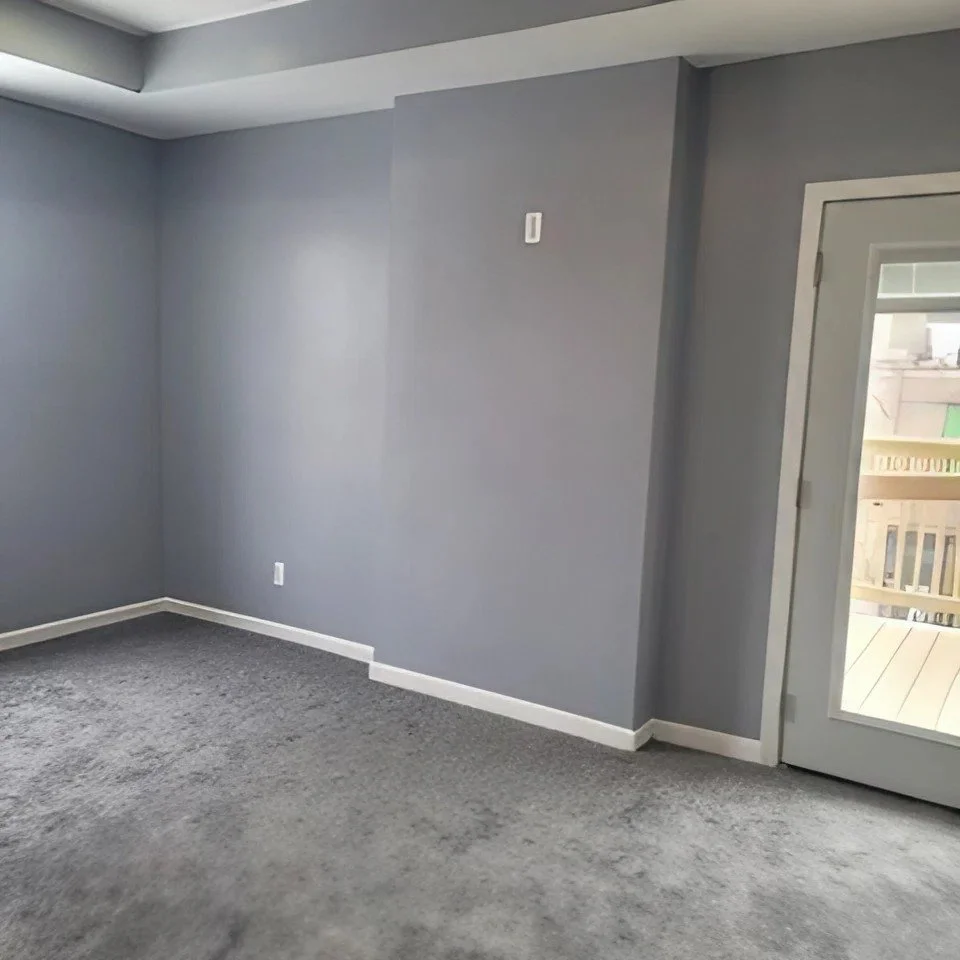
Empty room with light gray walls, white electrical outlet, and gray carpet flooring.
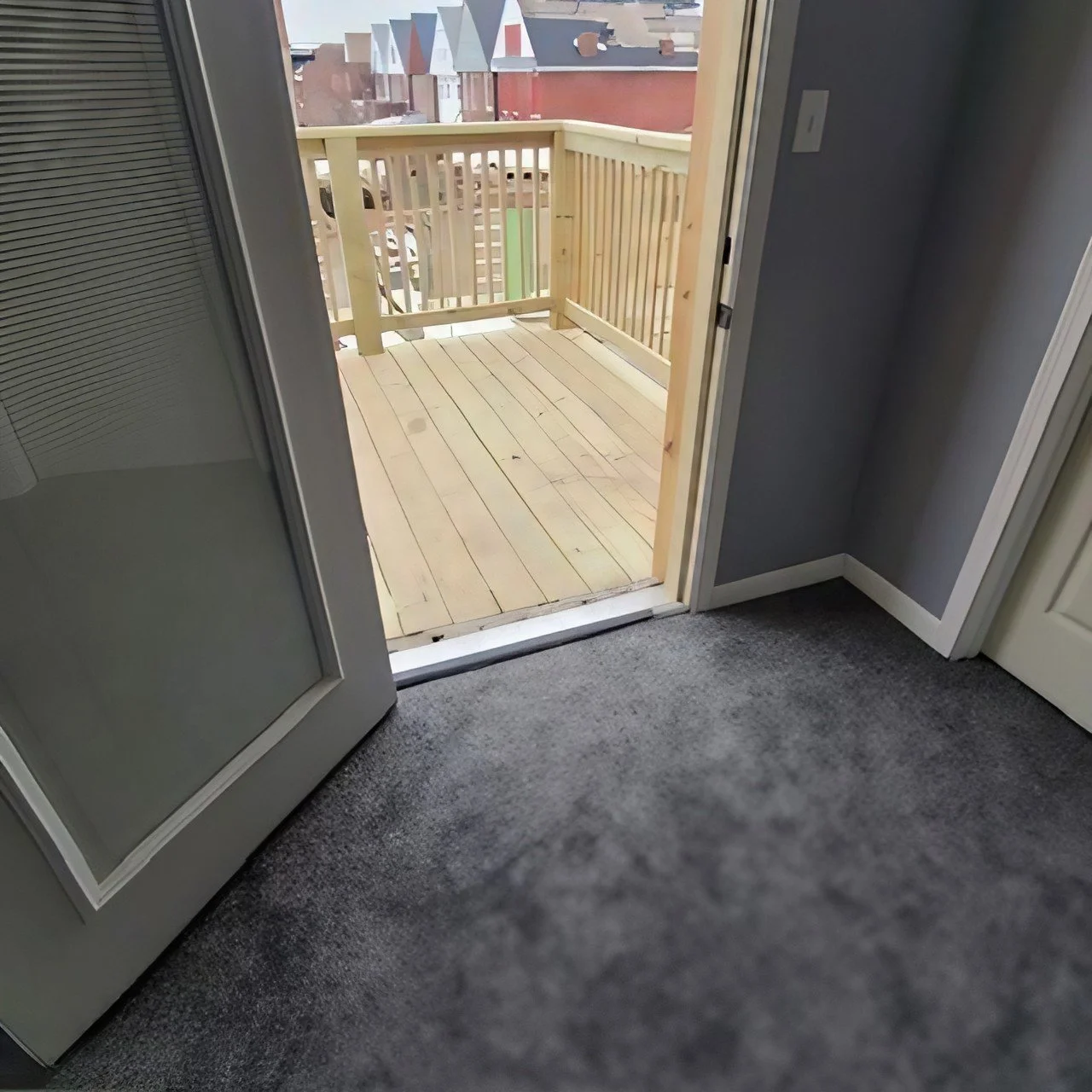
View of a small wooden balcony with a surrounding railing, seen from the inside of a house through a sliding glass door, with gray carpeted flooring inside.
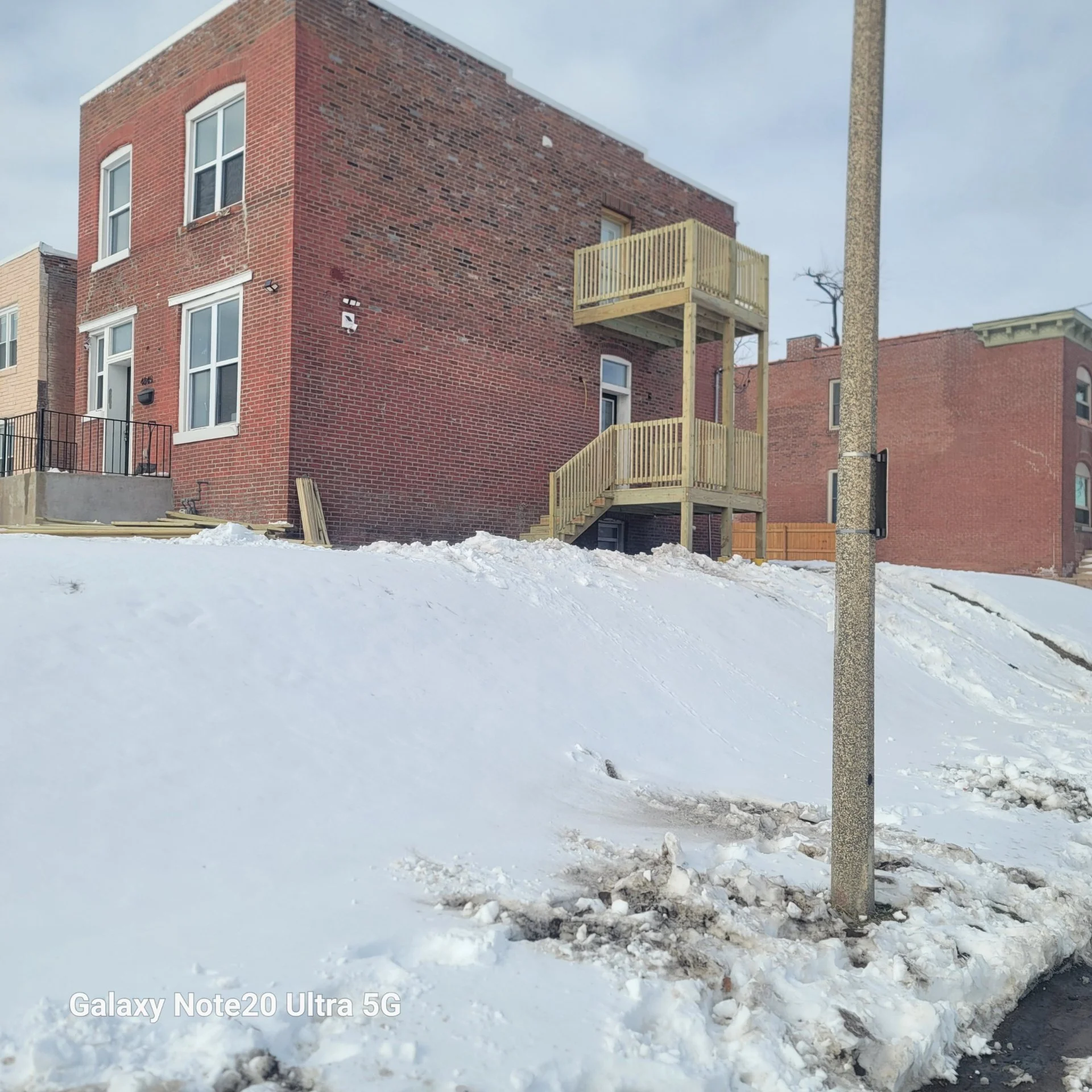
A multi-story brick building with large windows, a staircase leading to a balcony, and snow-covered ground with a pole in the foreground.
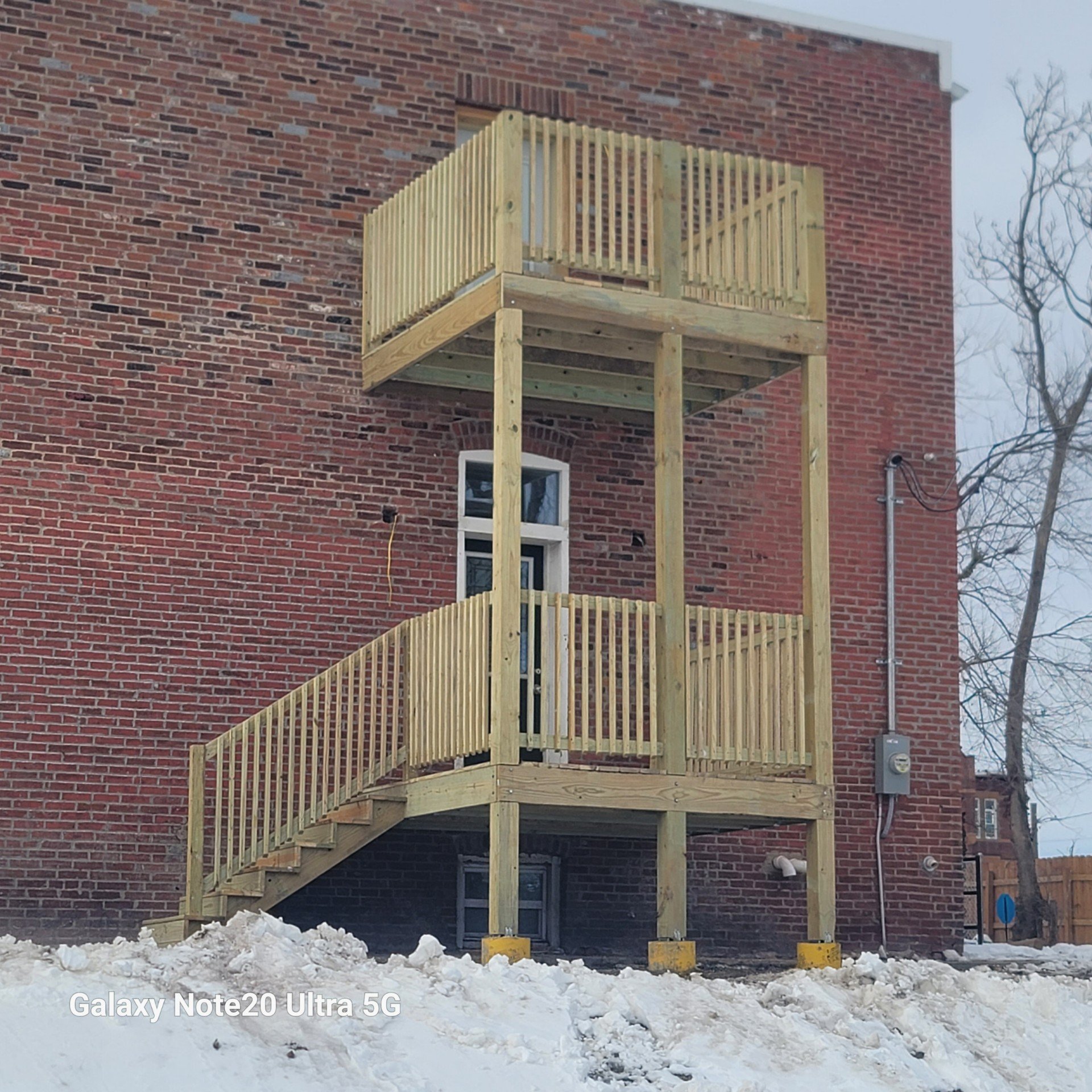
Newly built wooden staircase and balcony attached to a red brick building in snowy weather.